
Called to Heal: Faith, Service, and Global Health
At this year’s John Carroll Weekend in Puerto Rico, Georgetown alumni, faculty, and friends gathered for a panel discussion exploring the evolving role of global health in an increasingly complex and interconnected world. Moderated by Norman J. Beauchamp Jr., executive vice president for health sciences, the conversation, Called to Heal: Faith, Service, and Global Health, brought together leaders in service, policy, and global health leadership to examine how Georgetown’s Jesuit mission continues to shape responses to health disparities worldwide.
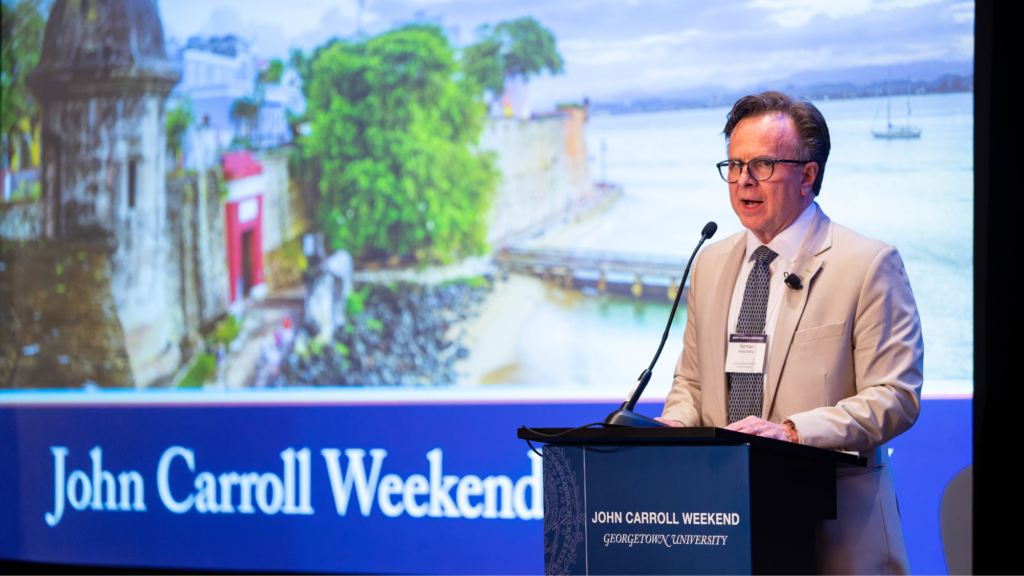
Framing the discussion, Beauchamp emphasized that global health “lives at the intersection of medicine, policy, law, economics, faith and service,” requiring interdisciplinary collaboration and a deep commitment to partnership. Grounded in Georgetown’s Jesuit values of cura personalis (care of the whole person) and cura apostolica (care for the mission), he noted that the university’s approach calls on its community not only to care for the whole person, but to steward the broader mission—meeting people where they are and working alongside communities to build sustainable solutions.
The panel discussion reinforced a shared responsibility to respond to today’s challenges with purpose. As Beauchamp noted, the work of global health is not confined to any one discipline or geography, but is carried forward by a community committed to advancing equity and care around the world.
Ronald A. Mercier
Former Provincial, U.S. Central and Southern Province of the Society of Jesus; Georgetown University Board of Directors

Mercier offered a perspective rooted in faith and vocation, reflecting on global health as an extension of accompaniment and service. Drawing on his leadership within the Jesuit community, he emphasized the importance of presence—walking alongside individuals and communities—and the moral responsibility to respond to human suffering with humility, compassion, and sustained commitment.
Nalini Anand
Managing Director, Georgetown University Global Health Institute
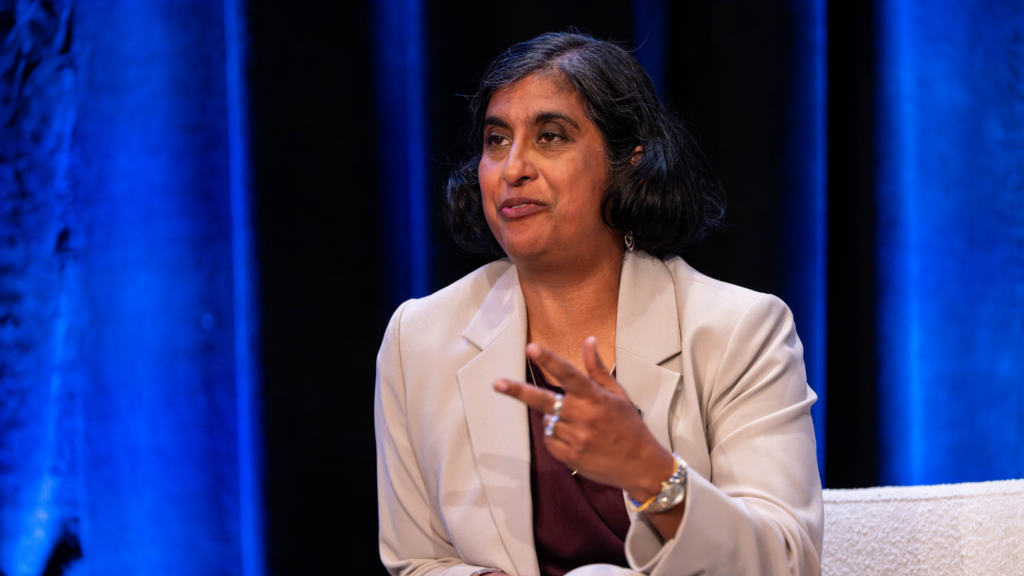
Anand highlighted the role of academic institutions in advancing interdisciplinary solutions, underscoring how Georgetown’s unique array of schools and disciplines position it to work with in-country partners to effectively tackle global health challenges. She pointed to the importance of global learning models , and how Georgetown’s Global Health Institute is preparing future leaders to solve complex problems and advance health equity at scale.
Matthew Kavanagh
Director, Center for Global Health Policy and Politics; Associate Professor, Georgetown University

Kavanagh focused on the structural forces that shape health outcomes worldwide, including political systems, legal frameworks, and economic conditions. His remarks underscored that health inequities are often rooted in policy decisions, and that advancing global health requires not only scientific innovation, but also stronger community engagement, sound governance and accountability.