
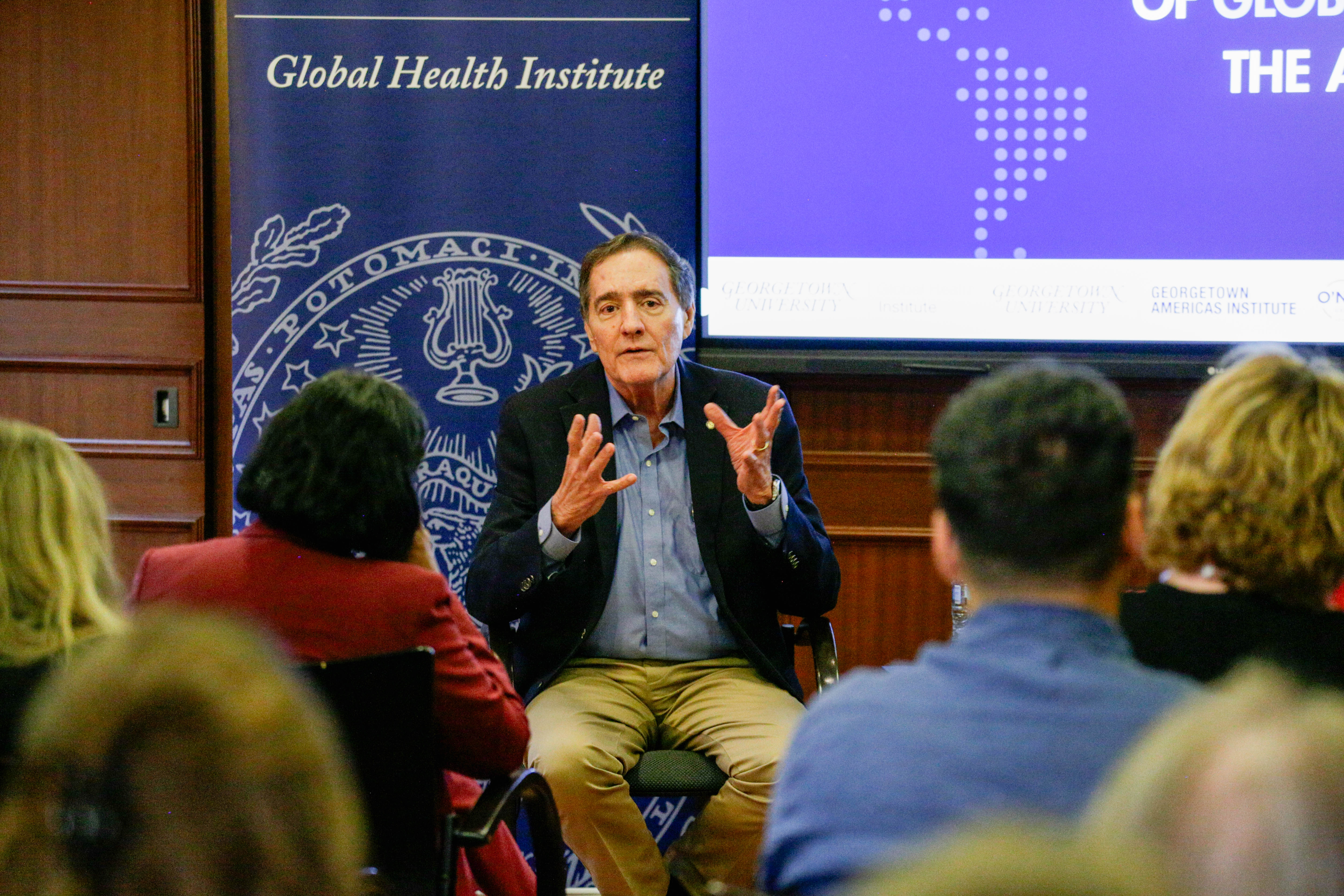
Founded in 1902, PAHO is the world’s oldest international health organization, working across 51 countries and territories.
While many countries in the region are classified as middle-income, large segments of the population, especially Indigenous communities, Afro-descendant populations, and those in rural or marginalized urban areas, continue to face significant barriers to care.
Rapid demographic transition is also reshaping the region’s health landscape, as countries shift from a young to an aging population in under 40 years—a process that took Europe more than a century.
Misinformation in Health
Yanovich began the conversation by asking about misinformation and declining trust in science, in particular in the wake of the COVID-19 pandemic.
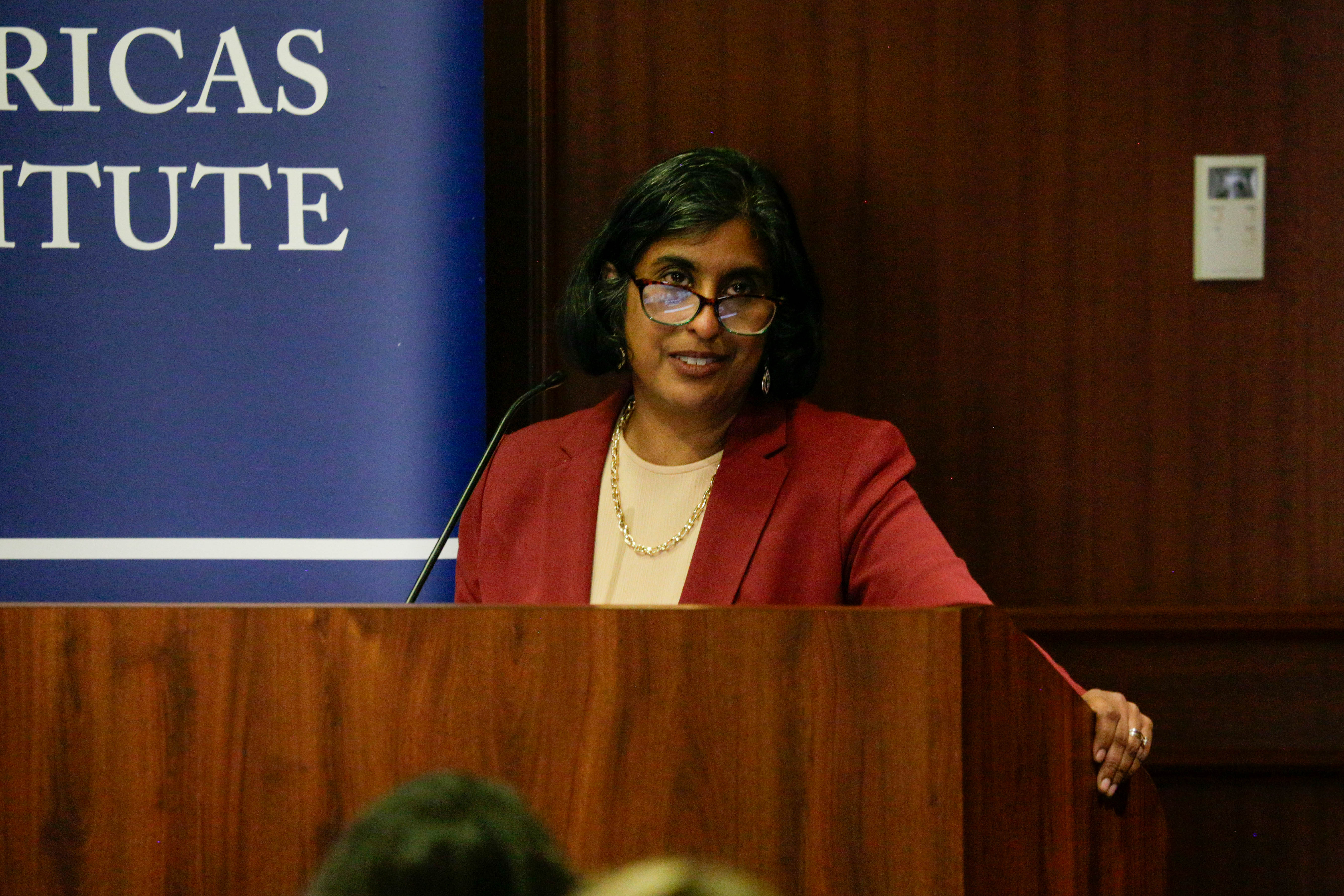
“Georgetown plays an important role in bringing together leaders to engage in dialogue around global health challenges and solutions,” said Nalini Anand, managing director of the Georgetown University Global Health Institute.
Dr. Barbosa said the rapid spread of unverified health claims on social media often competes with evidence-based guidance.
“Nowadays, thousands of ‘doctors’ on Instagram and Facebook are advertising things that can boost your immune system, so you don’t need antibiotics, or you don’t need to get a vaccine, or this can replace your treatment for cancer,” he said.
It is important, Dr. Barbosa said, that health messaging evolves to meet people where they are, as traditional communication approaches become less effective.
Barriers Beyond Misinformation
Dr. Barbosa cautioned against viewing misinformation as the sole driver of under-vaccination, pointing also to structural barriers that shape access to care.
In Latin America, he noted, many low-income households depend on a single income earner, often women working in the informal economy. For these families, repeated visits to health facilities can carry significant economic consequences.
“With all these new vaccines, [a] woman needs to go 10 to 12 times to a health center in the first year of her baby,” he pointed out. “Every time she goes, she will have less money to purchase food for her family.”
Even when vaccines are available at no cost, logistical constraints such as limited clinic hours can create additional barriers.
“We need to [make] better use of data to identify who remains unvaccinated, understand the barriers they face, and adopt strategies to overcome them,” he said.
Collaboration in Health Delivery
The conversation later turned to how PAHO is translating these challenges into practical, cross-sector collaboration, with a focus on hard-to-reach settings.
Dr. Barbosa pointed to PAHO’s role in supporting countries by providing expert guidance and facilitating the joint purchase of essential supplies. In Paraguay, for example, PAHO supported the Ministry of Health in addressing tuberculosis in prisons.
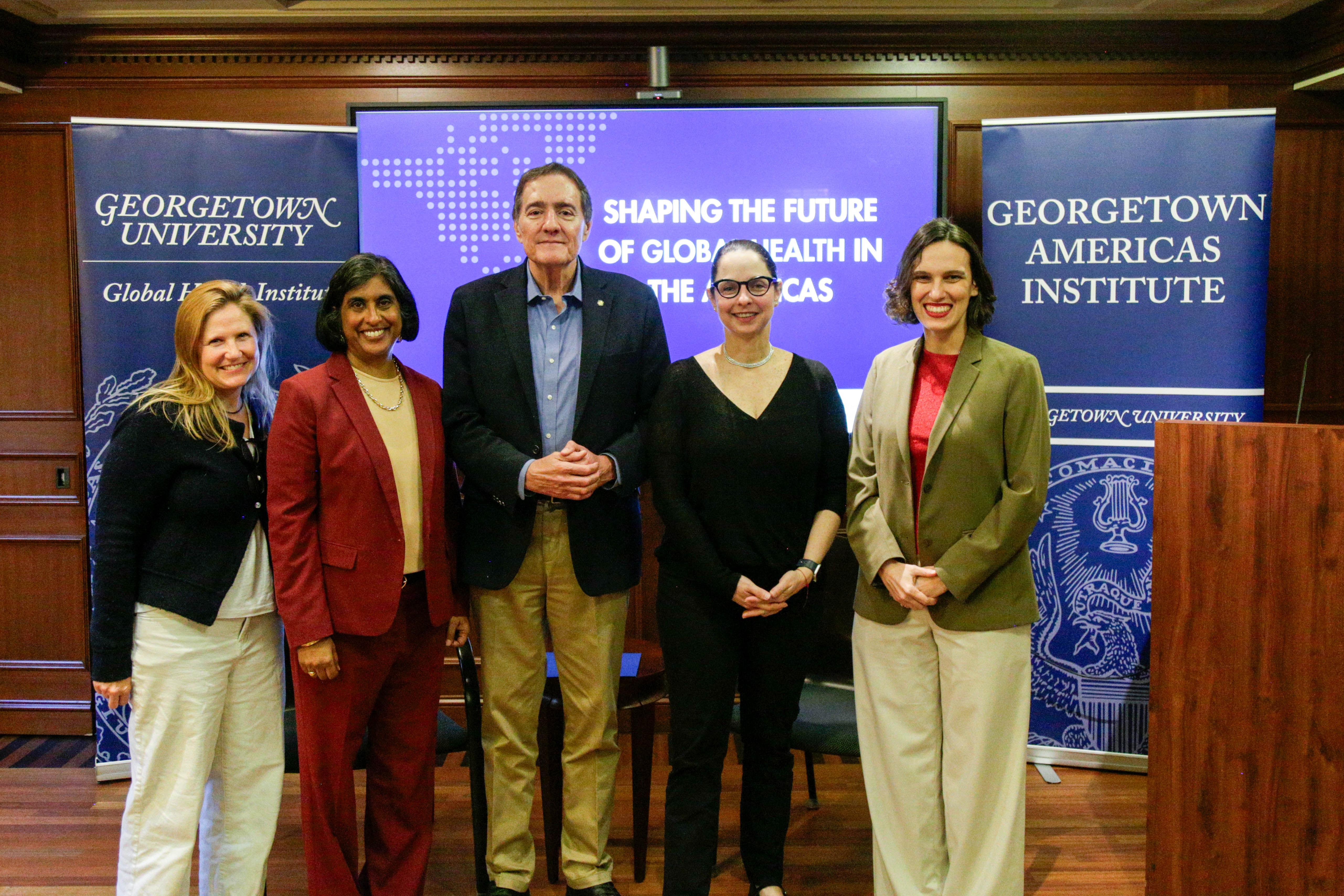
The event was co-sponsored by the Global Health Institute, the Georgetown Americas Institute, the Center for Health and Human Rights at the O’Neill Institute, and the Science, Technology, and International Affairs program.
Across Latin America, tuberculosis rates in prisons are up to 50 times higher than in the general population, driven largely by overcrowding and poor ventilation.
“[Mobilizing] 1,000 prisoners from the prison to a health center is a logistical nightmare,” he said.
PAHO helped bring mobile X-ray units directly into correctional facilities for on-site screening. Dr. Barbosa explained that artificial intelligence is being used to identify suspected cases more efficiently, with only those requiring further evaluation referred to health centers.
“Now, you need only to mobilize 20 to 40 prisoners to go to a health center after the screening,” he said.
Advice for Emerging Global Health Professionals
Dr. Barbosa also spoke about relying too heavily on long-standing frameworks without questioning their continued effectiveness.
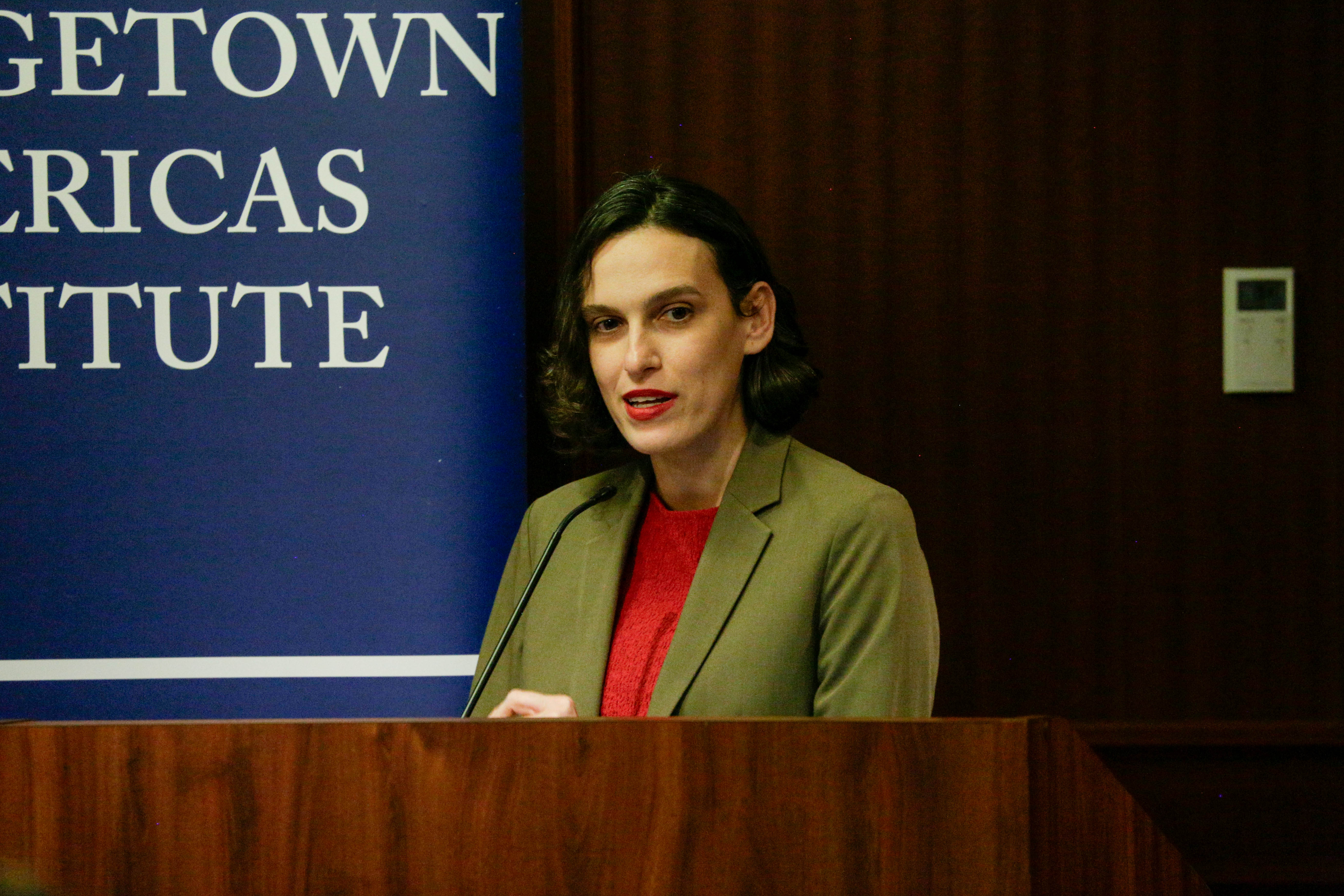
“These are challenging times, but also a time to reimagine and think creatively about how to build and how to tackle these challenges,” said Isabel Barbosa, associate director of the Center for Health and Human Rights at the O’Neill Institute.
“[The results of] a successful strategy can become a flat line after 20 or 30 years,” he said. “Because it was a very good strategy, when the target was so wide, you can start at any point.”
The challenge, he added, emerges when progress begins to plateau, often because certain populations are no longer being reached by traditional approaches. This requires programs to evolve, identify barriers, and adapt delivery strategies more effectively.
Beyond technical expertise, he encouraged emerging professionals to cultivate interdisciplinary understanding, from anthropology to diplomacy, to better translate policy into practice across diverse communities.
“The most important thing,” he said, “is to keep your mind open and always ask: how can I do better?”