
Across Africa and the African Diaspora, a New Vision for Reproductive Care Emerges
As evening settled in, Lauren Arrington put her two older children to sleep. Then, the labor hit.
Arrington, a practicing midwife, was 40 weeks pregnant and had planned to give birth at the hospital where she worked.
In the middle of heavy contractions, she looked up at her partner and made a request. She asked him to shave, put on clean clothes, and freshen up before they left for the facility.
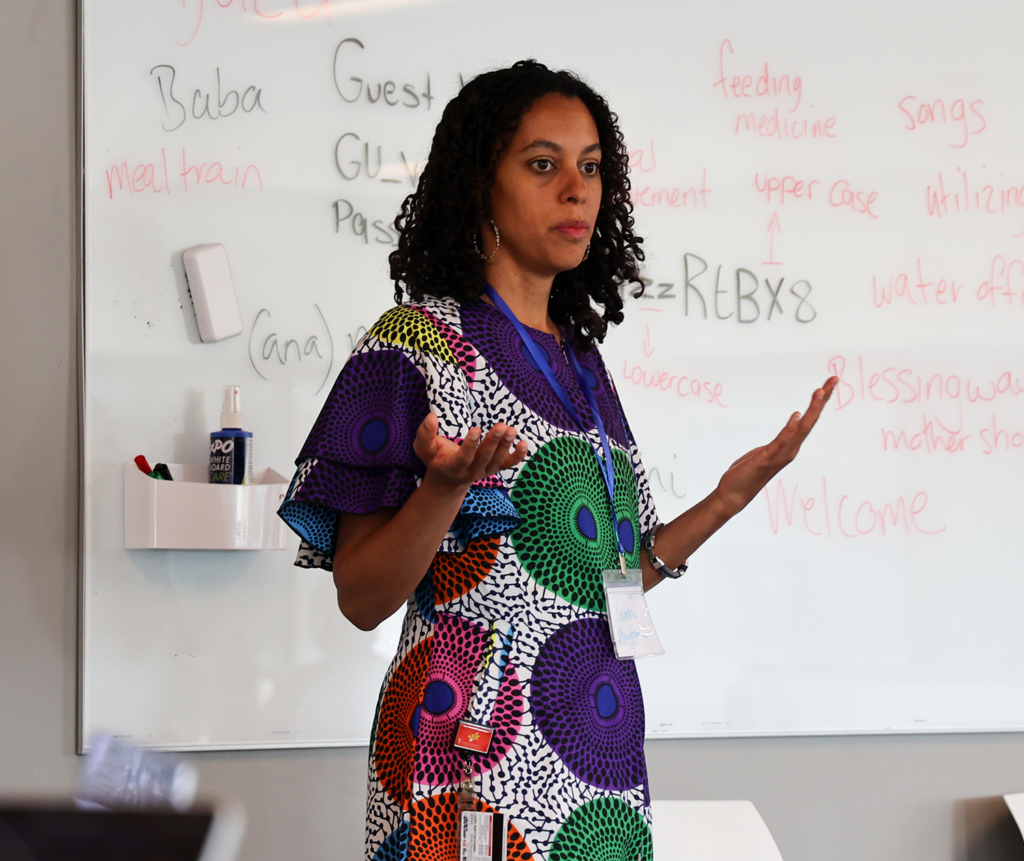
Arrington is an associate professor at the Berkley School of Nursing and the Susan H. Mayer Endowed Professor in Health Equity.
Before he could finish, her water broke. The baby was coming.
Crouching on their bathroom floor, her partner became her midwife, safely welcoming their newborn son.
Later, Arrington wondered why, at such a powerful moment, she was focused on her partner’s appearance.
She realized it was a behavior passed down by generations of her family. Whenever her parents or grandparents entered a health care facility, they made extraordinary efforts to distinguish themselves—to prove they were worthy of equitable care.
“I realized at that moment that my health system was not trustworthy,” she said.
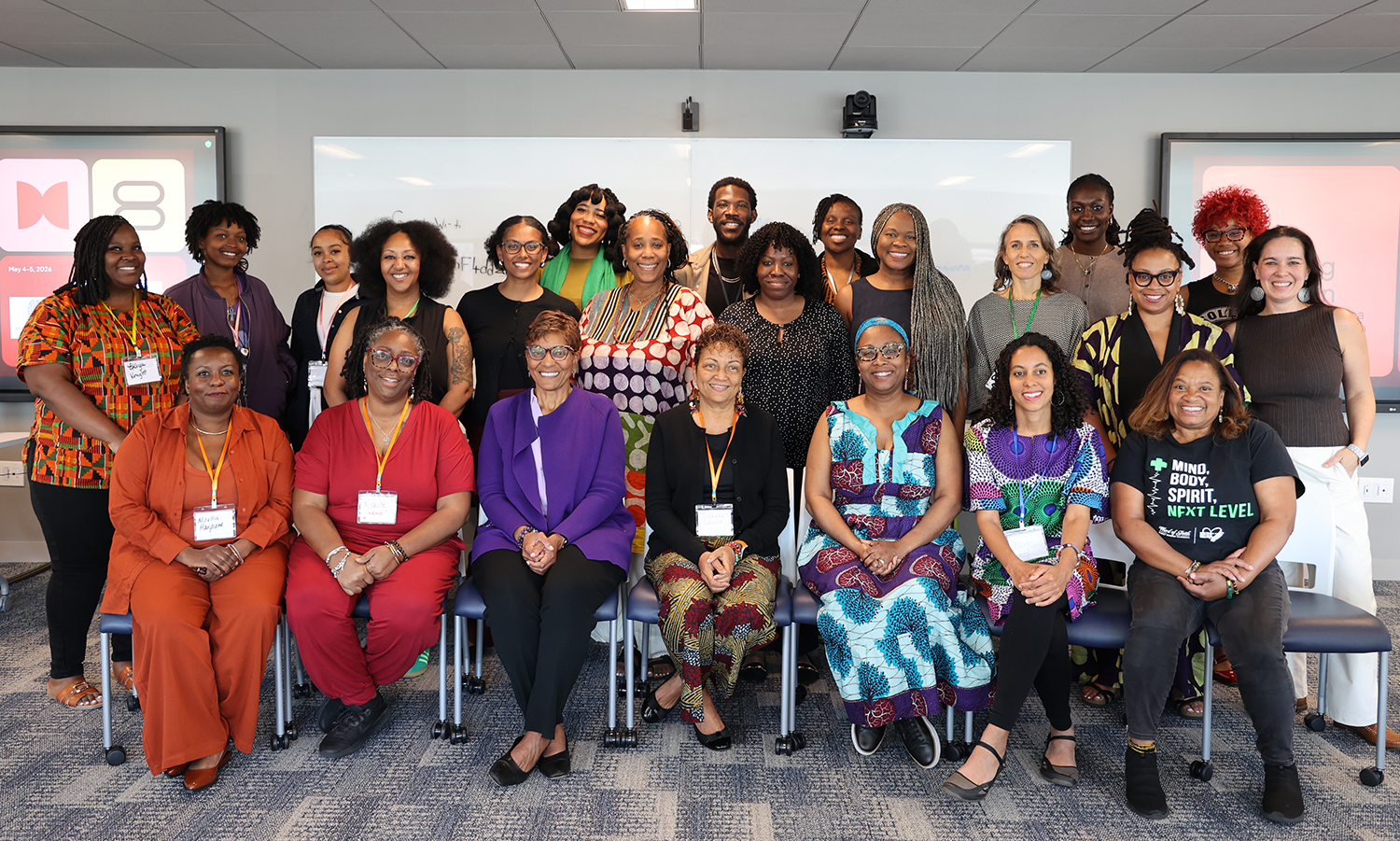
That realization led Arrington to reflect on how reproductive care could be reimagined. Those reflections would later help inform “Centering Liberation: Partnering Across Africa and the African Diaspora to Reimagine Reproductive Care,” a four-day symposium at Georgetown University’s Capitol Campus that convened more than 80 participants from across Africa and the African diaspora.
Supported by an International Collaborative Grant by the Office of the Vice President for Global Engagement, Arrington and Christina X. Marea, Ph.D., co-organized the symposium with Kanika Harris, Ph.D., executive director of the National Association for the Advancement of Black Birth, and Rose Aka James, MPH, co-founder of RepraHealth.
Inside the Symposium
For four days, participants from Zimbabwe, Malawi, Kenya, Tanzania, Ghana, United States, Caribbean, South America, and other parts of the African diaspora gathered around tables covered with notebooks and watercolor paints. A large map invited them to place pins on the communities they call home, while an altar held objects of personal significance.
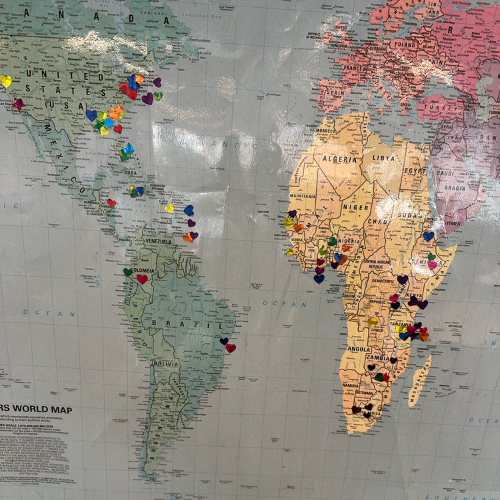
Pins placed on a map reflected the communities participants represented.
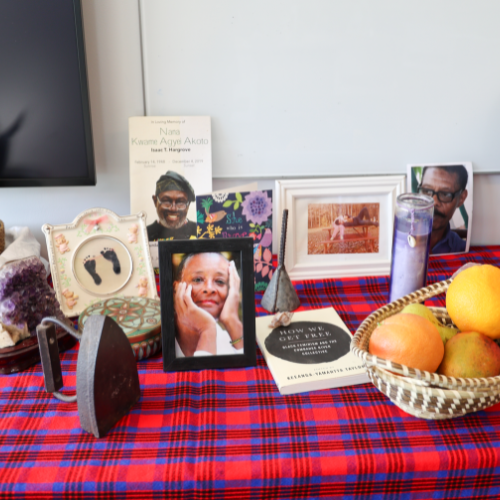
An altar to honor the ancestors.
In one workshop, Zimbabwean-American doula Mavhu Hargrove challenged participants to rethink how language shapes the way people understand birth.
“In Shona, the word for midwife means ‘the one who sits by the shrine,’” she explained, describing how birth was traditionally understood as both a medical and sacred event.
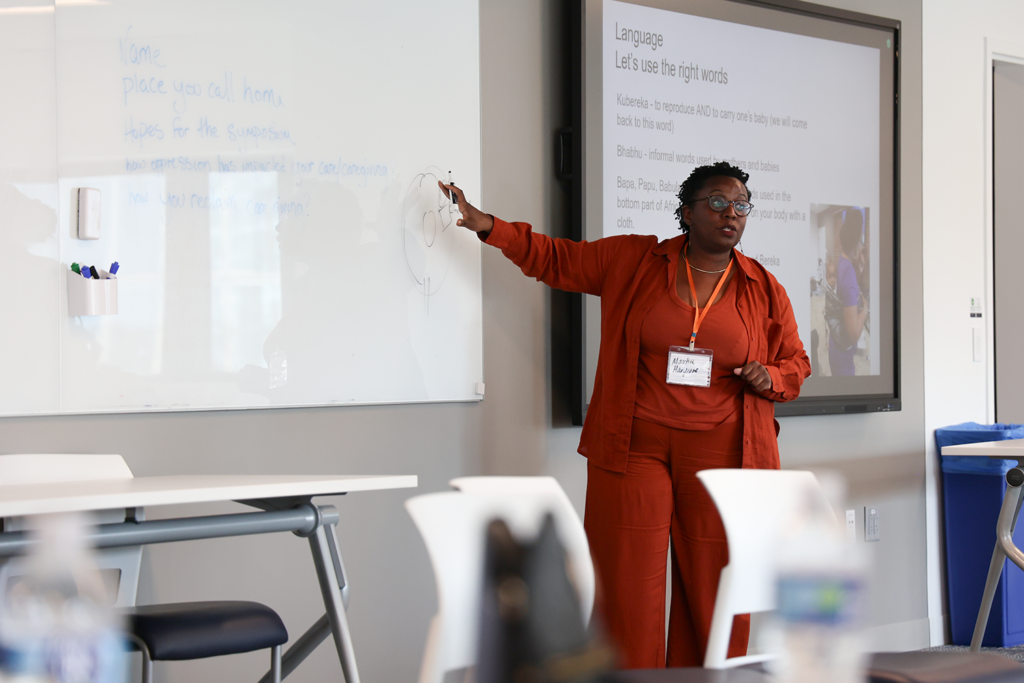
“Hondo inorwa nevose,” a Shona proverb meaning “everyone has a role to play,” guided Hargrove’s message that every contribution matters in advancing reproductive justice.
The conversations also touched on identity and belonging.
During a panel on partnerships across Africa and the African diaspora, participants reflected on what it means to decolonize collaborations formed between African communities with shared histories but different lived experiences.
One attendee noted how meaningful it was to see the word “African” included in the symposium’s title, saying it signaled an intentional effort to make space for members of the diaspora whose experiences are often absent from conversations about Black maternal health.
Learning Across Generations
The symposium also drew students interested in maternal and reproductive health, including students from Georgetown University and Howard University.
Among them was Kayla Wontumi (H’27), a 2025-2026 Maeve Kennedy McKean Global Health Award recipient. Wontumi was preparing to conduct field research on group care models and holistic approaches to maternal health in Zanzibar. She will conduct her work in partnership with WAJAMAMA, a Zanzibar-based nonprofit organization founded by Georgetown alumnus Nasifa Jiddawi (NHS’14).
“This symposium challenged me to think beyond traditional, textbook approaches by centering the histories, cultures, and lived experiences of the communities we hope to serve,” Wontumi said.
What Comes Next
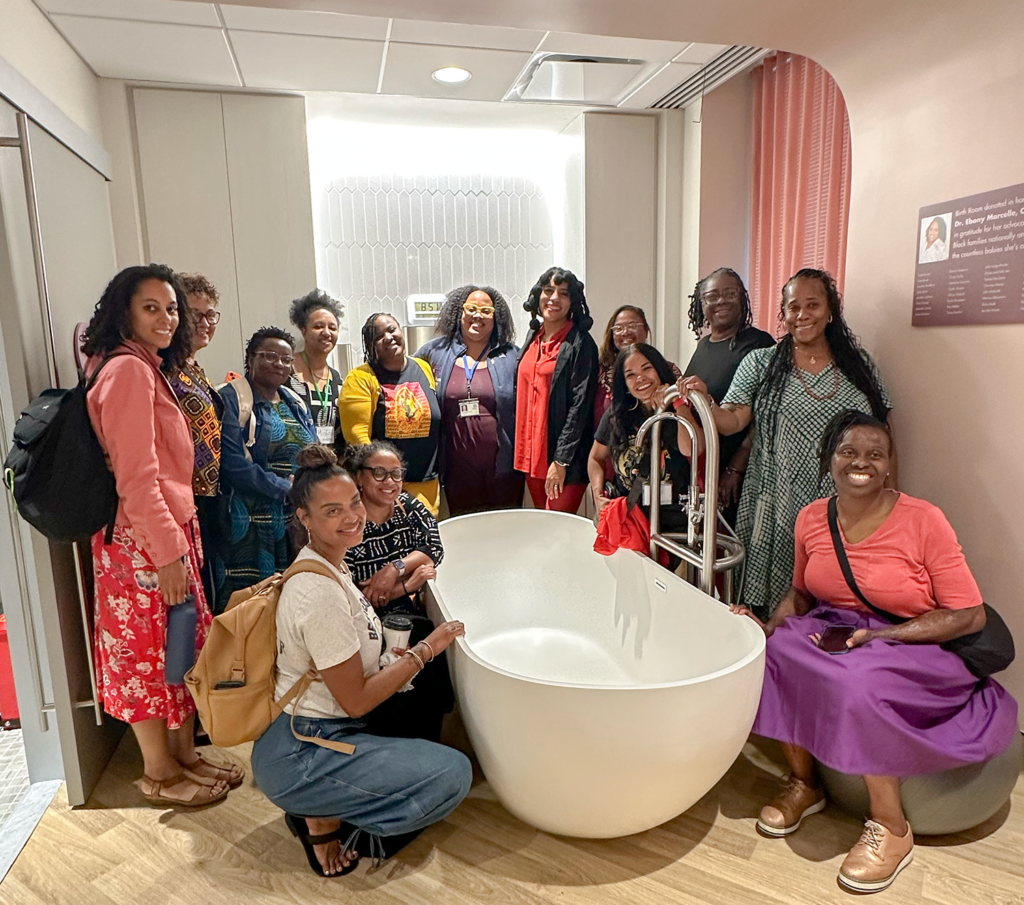
A tour led by Ebony Marcelle, DNP, Berkley School of Nursing adjunct faculty member and director of midwifery at Community of Hope’s Family Health and Birth Center in Northeast Washington, DC, gave attendees an opportunity to learn about the center’s community-based model of maternal and reproductive care.
Organizers view the symposium as the start of an ongoing collaboration.
In the months ahead, organizers hope to build a learning community where participants can continue exchanging experiences and resources, including through a book club.
Another idea that emerged was Project 2050, an early vision for a future in which half of all babies are welcomed under the care of midwives practicing liberatory models of care by 2050.
“We hope it marks the beginning of something expansive and powerful—a space where ancestral and forgotten wisdom can find us again, deepening how we understand, practice, and move midwifery through the world,” Harris said. “This is just the beginning.”