
Steven Singer Receives NIH Grant to Study Parasitic Infection Linked to Childhood Growth Stunting
Steven Singer, Ph.D., professor in the Department of Biology at Georgetown University, has received funding through a multi-principal investigator R01 award from the National Institutes of Health to identify new approaches for reducing the harmful effects of Giardia, a common intestinal parasite that contributes to childhood growth impairment worldwide.
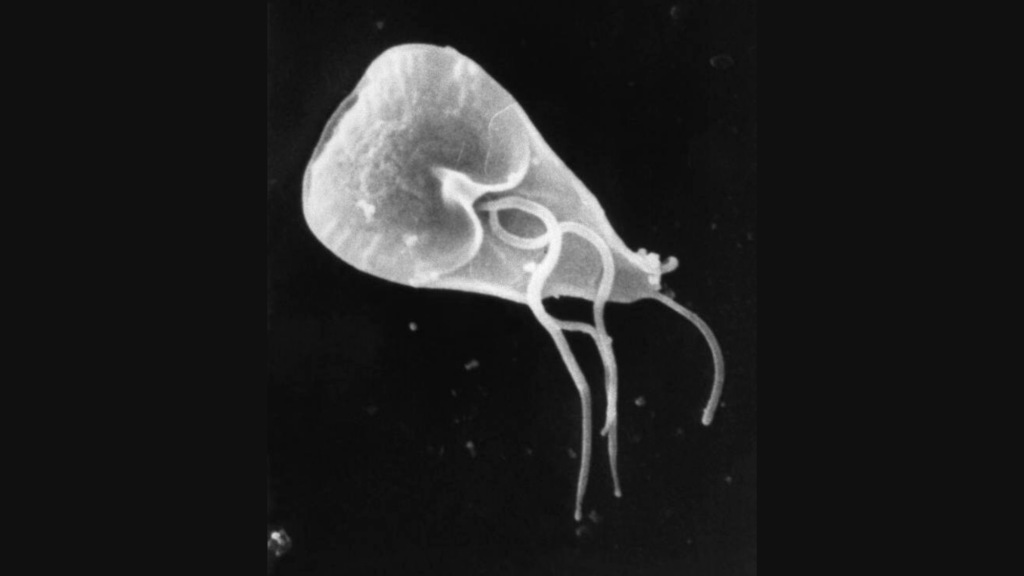
A magnified image of Giardia lamblia, a parasite that infects the small intestine and is one of the most common causes of diarrheal disease worldwide.
The five-year award totals approximately $3.8 million, with the University of North Carolina serving as the lead institution. Georgetown University will receive approximately $440,000 to support its role in the collaborative research project.
The project, “Targeting the Giardia Secretome to Prevent Growth Failure,” focuses on understanding how molecules released by the parasite disrupt normal intestinal function. Giardia infection is one of the most common intestinal parasitic diseases affecting children globally and is a major contributor to growth stunting, a condition in which children experience reduced height for their age due to chronic health and nutritional challenges.
The research team will identify molecules secreted by the parasite that contribute to intestinal dysfunction, nutrient malabsorption, and impaired growth. They will also investigate whether immune responses against these molecules can reduce the severity of infection and evaluate their potential as targets for a vaccine designed to improve children’s health.