
Georgetown-Lancet Commission on Faith, Trust, and Health
The Georgetown-Lancet Commission on Faith, Trust, and Health , housed in the Georgetown University Global Health Institute’s Initiative on Faith, Trust, and Health, seeks to generate a body of knowledge on key issues that have thus far shaped current dynamics at the intersection of faith, trust, and public health.
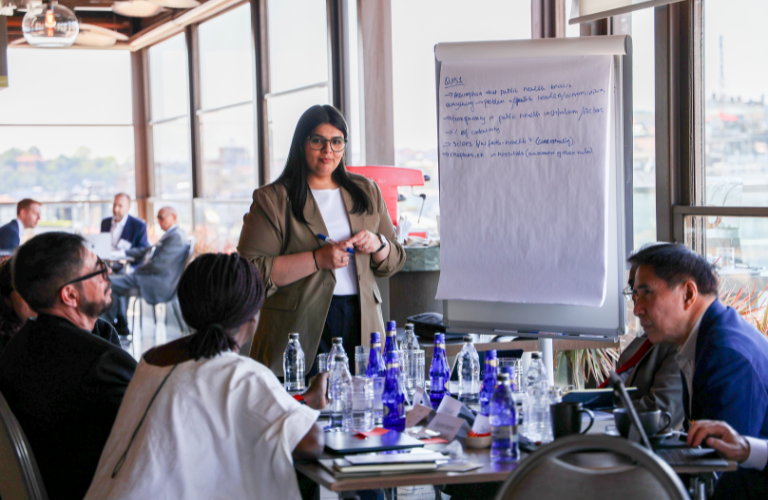
There has been an increase in the erosion of public trust in key institutions over the last decade in part driven by global social, political, economic changes, and cultural dynamics driven by widening global income inequalities, economic insecurity, and fear for hitherto stable working populations in industrialized countries.
The fast decline in trust of public institutions and public leaders has been fueled by highly segmented information dissemination and media consumption that have resulted in population differentiation by socioeconomic, geographical location, and political views.
The erosion of trust in public health institutions poses a significant risk to the well-being of individuals, families, and countries throughout the world. Without trust, there is a greater risk that individuals will not take advantage of vaccines, therapeutics, health services, and health information that can safely reduce morbidity and mortality for themselves and others.
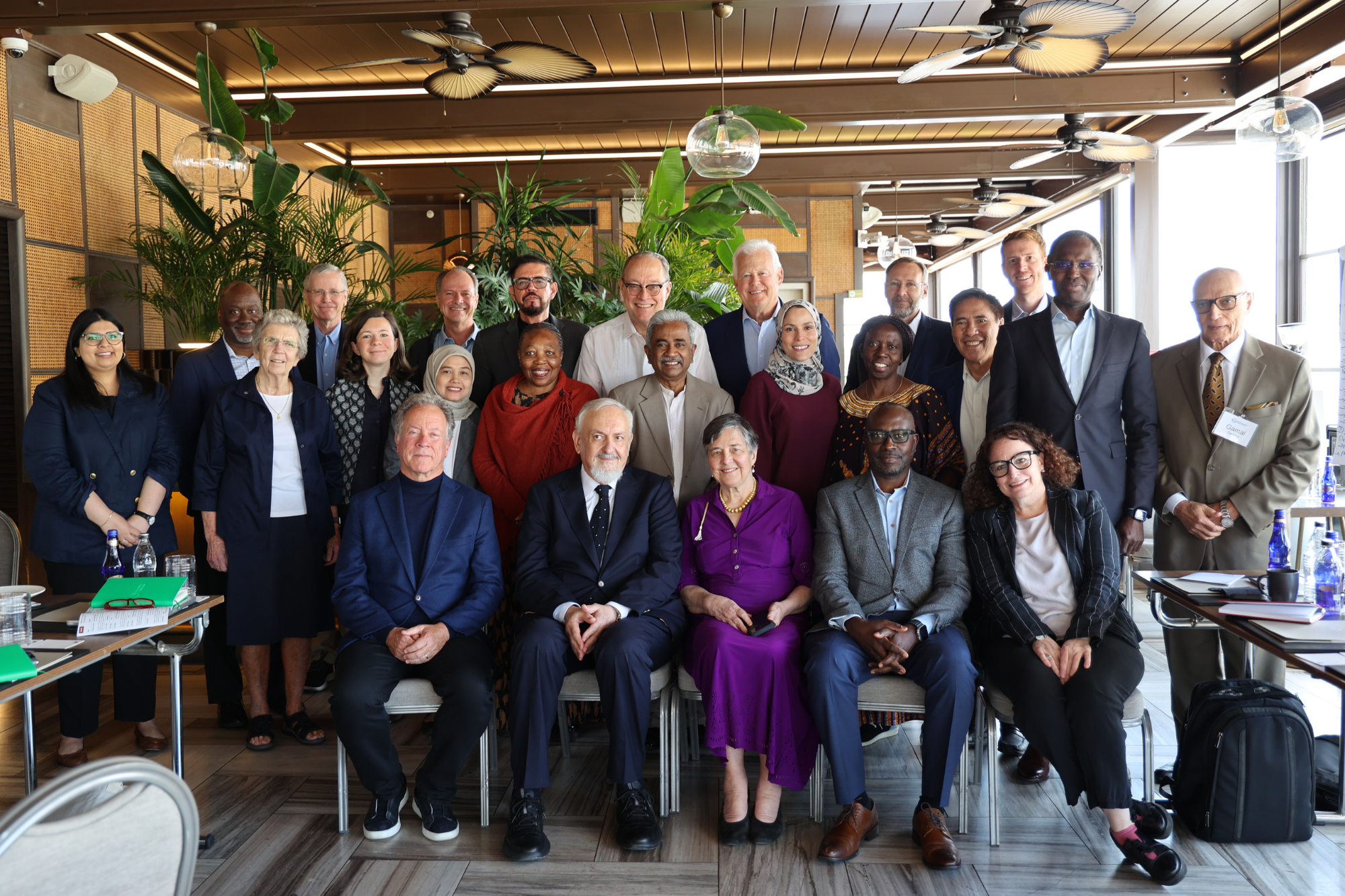
Members of the Commission
More than twenty diverse voices from both public health and faith traditions across the Global North and South.
Read Profiles
Lancet Comment
The comment highlights the Commission’s aim for “dialogue and mutual understanding between faith and health actors across the world,” particularly in response to shifting dynamics of trust.
Read Comment
Webinar Series
In the lead-up to the commission’s final report, we will host timely conversations on faith, trust, and health.
Watch RecordingsLaunched in July 2024, the commission will include diverse thought leaders from across the world and be comprised of equal numbers of public health experts and faith community actors to ensure an honest and balanced exchange of views. The commission will consider a broad range of faith traditions, including Christianity, Islam, Judaism, Buddhism, Hinduism, and other non-Abrahamic belief systems and Indigenous spiritual traditions.
Initial Objectives
- Gather and systematically analyze research on the role of faith communities and their leaders in building trust and sharing information in public health crises, with an emphasis on COVID-19 and other recent major public health events;
- Identify and surface models and lessons for establishing and deepening trusted partnerships between public health agencies and faith communities at the global, national, and local levels across a range of community settings;
- Propose optimal structured processes to ensure faith perspectives are integrated into public health science scope; and
- Recommend strategies for engaging faith leaders as trusted messengers for sharing and transmitting vital public health information to their communities.
The commission’s final report will include a robust dissemination plan to engage public health agencies and faith actors with its recommendations. Moreover, the commission will seek to work in close communication with other institutions examining trust and health.